

What Non-Ferrous Metals Can You Recycle at a Scrap Yard?
October 26, 2026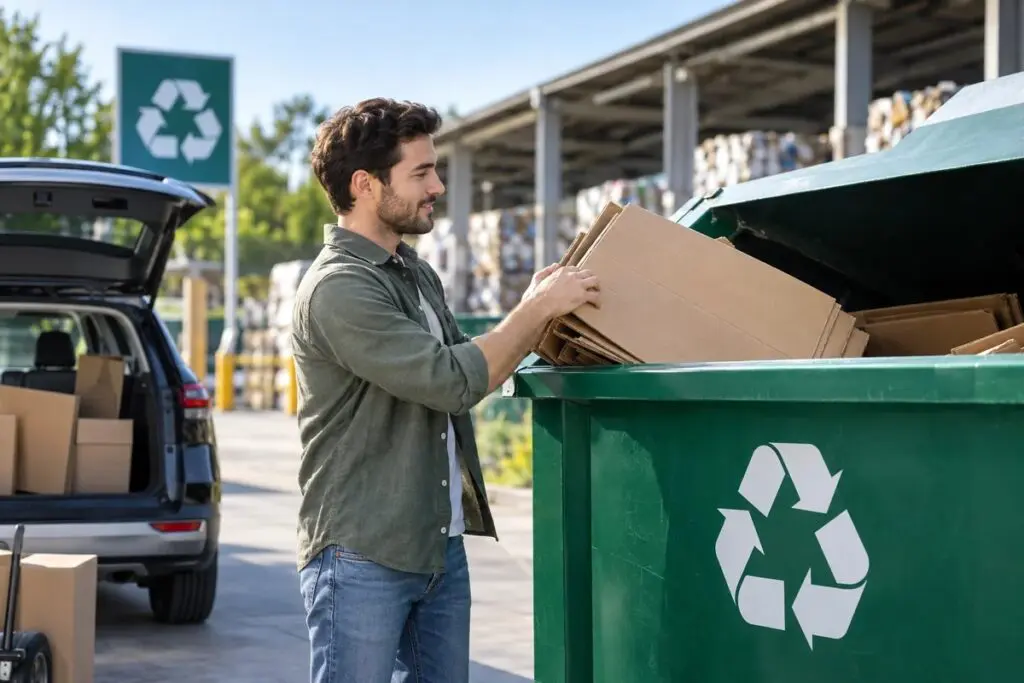
Start with the easiest place to take the boxes
The simplest rule is also the one that saves the most time. Clean cardboard usually goes to curbside recycling or a local drop-off, while reusable boxes are often better passed along to someone else. If you are staring at a stack of flattened cartons after moving day, the fastest answer to where can I recycle moving boxes after a move is usually the nearest municipal recycling program, a nearby recycling center, or a retailer that accepts corrugated cardboard.
At Basin Recycling & Steel, it helps to sort the load before you load the car. That means dividing the boxes into three groups:
- Clean and dry, which are usually ready for recycling.
- Still usable, which should be offered for reuse first.
- Damaged or contaminated, which may need trash disposal or a different recycling stream.
That quick split matters because moving boxes are not all treated the same. One soggy box can get a whole stack turned away, while a sturdy clean box can often be reused by someone else with no extra work.
Check curbside recycling rules before you drive anywhere
If you want to know where to recycle moving boxes, start with your city sanitation page or your hauler’s rules. Some curbside programs accept flattened cardboard at the curb, while others want you to bring it to a drop-off site instead. A five-minute check online can save you a wasted trip.
Look closely at the acceptance details. Most programs want boxes to be empty, dry, flattened, and within any size or bundle limits listed by the local program. If the rules say cardboard must be tied, stacked, or placed inside a bin, follow that format exactly. Programs often reject bulky loads that stick out of the cart or blow apart in the truck.
Apartment buildings and shared complexes can have different rules from single-family pickup. The same boxes that are accepted at a curb in one neighborhood may need a separate drop-off in another. If you live in a multi-unit building, ask property management or the hauler before you assume the curbside cart is fair game.
Look for a moving box recycling drop-off near you
When curbside pickup is not an option, search for a moving box recycling near me location that takes corrugated cardboard. Common choices include city recycling centers, transfer stations, material recovery facilities, and some home improvement stores. These sites are often the right answer for bigger loads, especially after a move when cardboard piles up fast.
Before you leave home, ask three specific questions: do you take corrugated cardboard, do the boxes need to be flattened, and is there a separate lane or dock for residential loads? Those details sound small, but they can change whether you pull in, unload, and leave in one trip or end up looping around the site looking for the right entrance.
If the entrance seems confusing, that is normal. Staff can usually point first-time visitors in the right direction, which is a lot easier than guessing with a car full of boxes. Basin Recycling & Steel recommends calling ahead when a site’s layout is unclear, especially if you are bringing a larger stack or multiple box sizes.
Prep cardboard so the load gets accepted
Good cardboard moving box disposal starts with a clean load. Flatten the boxes, stack them neatly, and keep them dry so they do not blow around or get rejected at the gate. A tidy stack is faster to unload and easier for the facility to sort, which matters more than people think.
Separate the non-cardboard items first. Packing foam, plastic wrap, air pillows, and bubble wrap usually need a different stream, and leaving them in the pile is one of the quickest ways to create a problem. A few minutes of sorting at home is easier than trying to peel plastic out of a cardboard load on site.
Tape, labels, and stickers are usually not the main issue. Heavy residue, food spills, or water damage are. If a box is soaked through, greasy, or stained with food, it can stop being recyclable even if the cardboard itself looks fine at a glance. The simple rule is easy to remember: if the fiber is dirty enough that you would not want to handle it, recycling may not take it either.
When boxes are better reused, donated, or given away
If a box is still sturdy and clean, reuse is often the better first step. Before you recycle, offer usable boxes to neighbors, local community groups, or someone else who is planning a move. A box that can be packed and used again has more value than one that goes straight to the recycling pile.
Getting them out fast is usually simple. Post them in a local listing, use a neighborhood app, or ask friends and family who are packing or storing items. We see the same decision point all the time at Basin Recycling & Steel: if the box is clean, rigid, and dry, let it go to another move first. If it is bent, stained, or partly torn apart, recycle it once it is flattened.
A quick last check before you make the drop
Before you head out, confirm that the destination accepts corrugated cardboard, flatten the load, and keep a backup option in mind if the first place is full. Bring a box cutter, tape remover, and gloves so you can break boxes down on site if needed.
A quick phone call or website check can also save you from a wasted trip when a facility has special hours, separate unloading doors, or load-size limits. If you are local, Basin Recycling & Steel suggests making that call before you leave home, not after you are already in the car with a stack of boxes.
Questions to ask before you recycle moving boxes
Can moving boxes go in curbside recycling?
Yes, if the boxes are clean, dry, and flattened, because those are the conditions most curbside programs expect. Heavy tape, food residue, or water damage can trigger rejection, so check the city or hauler rules before you set them out.
What should I do with wet or dirty moving boxes?
Wet, greasy, or food-soiled boxes usually should not go in paper recycling. Trash the badly contaminated pieces and save any clean sections for storage or reuse. If the cardboard is soaked through or stained with food, treat it as a no.
Do I need to remove tape and labels first?
A little tape or a shipping label is usually fine, but large amounts should be removed when possible. Packing tape, plastic strapping, and foam inserts are more likely to cause problems than paper labels, so trim off the obvious plastic before drop-off.
What if the recycling center does not take boxes from residents?
The next best option is usually curbside recycling, a different local drop-off, or reuse through a giveaway listing. Check the city transfer station or a nearby retailer that accepts corrugated cardboard, then move to the next option instead of stopping at one no.
If you still need help sorting a load, contact Basin Recycling & Steel and use the website as your starting point. A quick check now is easier than hauling a full car of boxes to the wrong place.