

Aluminum Recycling Salt Lake City: What to Bring First
August 7, 2026
Recycling Center Utah: What to Know Before Drop-Off
September 21, 2026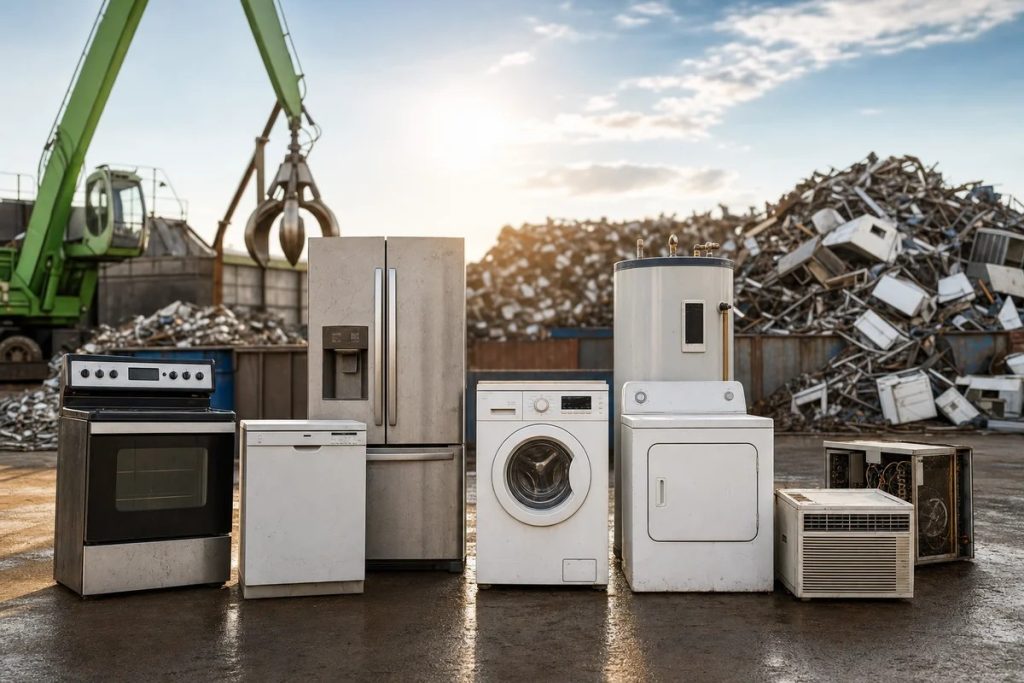
How to tell if an appliance belongs at the scrap yard
The simplest rule is this: scrap yards want appliances that are mostly metal and safe to process. Acceptance gets more selective when refrigerants, oils, batteries, wiring, or heavy plastic panels are part of the mix.
Start with a quick self-check at home. Unplug it, empty it, and look for coolant lines or any sealed system that should not be opened. From there, decide whether the item belongs in scrap, donation, or normal disposal. If you want a fast yes or no before you load the truck, Clearfield Recycling can usually help you sort that out over the phone.
One more thing matters more than people expect: every yard has its own rules for drop-off size, ownership requirements, and prep standards. A short call can save you a wasted trip, especially with large appliances or cooling units.
Which appliances are usually accepted at a scrap yard
When people ask which appliances can be recycled at a scrap yard or what appliances does a scrap yard take, the usual answer starts with the heavy, metal ones. Large household appliances often fit the bill because they contain steel shells, aluminum trim, copper wiring, motors, and other metals that can be recovered and sorted.
- Refrigerators
- Freezers
- Stoves
- Ovens
- Washers
- Dryers
- Water heaters
- Window air conditioners
The main condition that changes acceptance is whether regulated materials have been handled correctly. Cooling appliances are the big example, because refrigerant has to be recovered before the unit is ready for scrap under EPA rules. At Clearfield Recycling, that is the first question we usually want answered, since it affects whether the item can be processed right away or needs extra prep first.
Refrigerators, stoves, and other big metal appliances
Refrigerators and freezers are often accepted once refrigerant rules are met, because the steel cabinet and internal metal parts are useful scrap. Stoves, ovens, washers, and dryers are usually straightforward too, since they are mostly metal and easier to sort than mixed household junk. Shelves, drums, burners, motors, and wiring may be stripped or separated later during processing.
Smaller household appliances that can often be scrapped
Smaller plug-in items can also fit the answer to what household appliances can you scrap, especially when they still contain a meaningful amount of metal. Microwaves, toaster ovens, coffee makers, blenders, fans, and vacuum cleaners are common examples, but they usually bring in less value because the housing is lighter and the plastic share is higher.
That does not automatically make them useless. If the item has a steel shell, copper windings, or a motor, many yards will still treat it as mixed scrap. Remove batteries, detachable cords, and loose accessories when you can, because those parts affect how the load is sorted and whether the yard wants it at all.
Countertop appliances and kitchen gadgets
Countertop appliances with heating elements, small motors, or metal housings, like toaster ovens, compact mixers, and coffee grinders, often qualify as scrap in many yards. Items that are mostly circuit boards, sealed electronics, or lightweight plastic tend to be better handled as e-waste rather than standard scrap metal.
What scrap yards may refuse or send back
Many yards will turn away appliances with food waste, liquids, chemicals, pests, or other contamination that makes handling unsafe or messy. A refrigerator full of spilled food, a washer that still holds water, or an appliance with mold inside is far harder to receive than a clean, dry unit.
Another common reason for refusal is a sealed cooling system that has not been properly handled, especially when refrigerant is still trapped inside the unit. Scrap yards also reject items that are mostly plastic and electronics instead of metal, because there is not enough recoverable material to justify the sort. The safest move is to check local yard rules before you load the truck, since one shop may accept an item that another shop sends right back.
How to prepare appliances before drop-off
Good prep is simple, and it usually makes the trip faster. Unplug the appliance, clear out anything left inside, remove easy loose parts, and secure the item so it does not shift in the truck or trailer. If the scrap yard asks for ID or proof of ownership, bring it with you so the drop-off does not stall at the gate.
- Step 1: unplug, empty, and drain it
- Step 2: remove the easy extras
Those first two steps cover most of the prep work. Take out food, water, detergent, and ice before hauling the appliance, then drain any hoses or reservoirs that still hold liquid. After that, remove cords, trays, shelves, bins, hoses, and batteries if they come off easily and safely. Leave sealed refrigerant systems and other regulated components alone unless a licensed professional already handled them.
Loading matters too. Tie down heavy appliances so they do not tip, and keep sharp edges from sliding against other cargo. If you are bringing the load to Clearfield Recycling, a clean, secure drop-off makes the process smoother for everyone.
What changes the weight and payout of scrap appliances
Scrap yards commonly pay based on weight and material type, so a heavy steel appliance is treated very differently from a light plastic one. That means a refrigerator shell, a washer cabinet, or a water heater can be worth more than a small countertop appliance simply because there is more metal to recover.
The components that matter most are usually copper wiring, aluminum parts, steel shells, and motors. Clean, sorted loads are easier to process than mixed loads full of food residue, loose plastic, or non-metal attachments, which is one reason prep can affect both acceptance and payout. If you are comparing appliances accepted at a scrap yard, the basic question is not just what the item is, but how much recoverable metal is actually inside it.
Questions people ask before they recycle appliances at a scrap yard
Can a scrap yard take a refrigerator with the door still attached?
Often yes, but many yards want the door removed or secured before drop-off. Refrigerant handling is the bigger issue, and a unit with unrecovered coolant may be rejected even if the door is fine.
Do scrap yards accept washers and dryers with hoses or cords still on them?
Some do, but most prefer hoses, cords, and standing water removed first. That cuts mess and makes the load easier to sort, which is why a quick prep step usually helps.
What appliances can you scrap if they are mostly plastic?
Usually not much. Many yards will reject them or treat them as very low-value material. A high plastic-to-metal ratio or electronics-heavy construction is the clearest sign to send the item to a different disposal stream.
What should I remove before I bring in appliances accepted at a scrap yard?
Start with food, water, batteries, shelves, and loose cords. Leave sealed cooling systems and other regulated parts alone unless a licensed professional already handled them.
If you are still unsure, call the yard before loading the truck. A quick check with Clearfield Recycling can save you from hauling something that belongs in donation, e-waste, or standard disposal instead.
Contact Clearfield Recycling before your next drop-off, and we will help you sort out what can go to the scrap yard and what should stay off the trailer.
Bring the right load the first time
When you know what appliances you can recycle at a scrap yard, the rest gets simpler. Focus on metal-heavy items, handle cooling units carefully, strip off easy extras, and check the yard’s rules before you head out. That way you spend less time guessing and more time getting the load where it belongs.